
Your account executive is sitting across from a car dealer who has already said no twice. This time the dealer asks a reasonable question: if I buy a promotion with you, where does it live online?
There are two versions of what happens next.
Version one
Your rep turns the laptop around. The site’s front page has a contest that closed in November, a staff photo with two people who no longer work there, and a news section whose newest item is a press release about a format change.
The dealer is polite about it. They also stop treating your station as a media property and start treating it as a radio spot, which is a much smaller thing to buy. The conversation moves to rate, and you lose it, because rate is the only ground left.
Version two
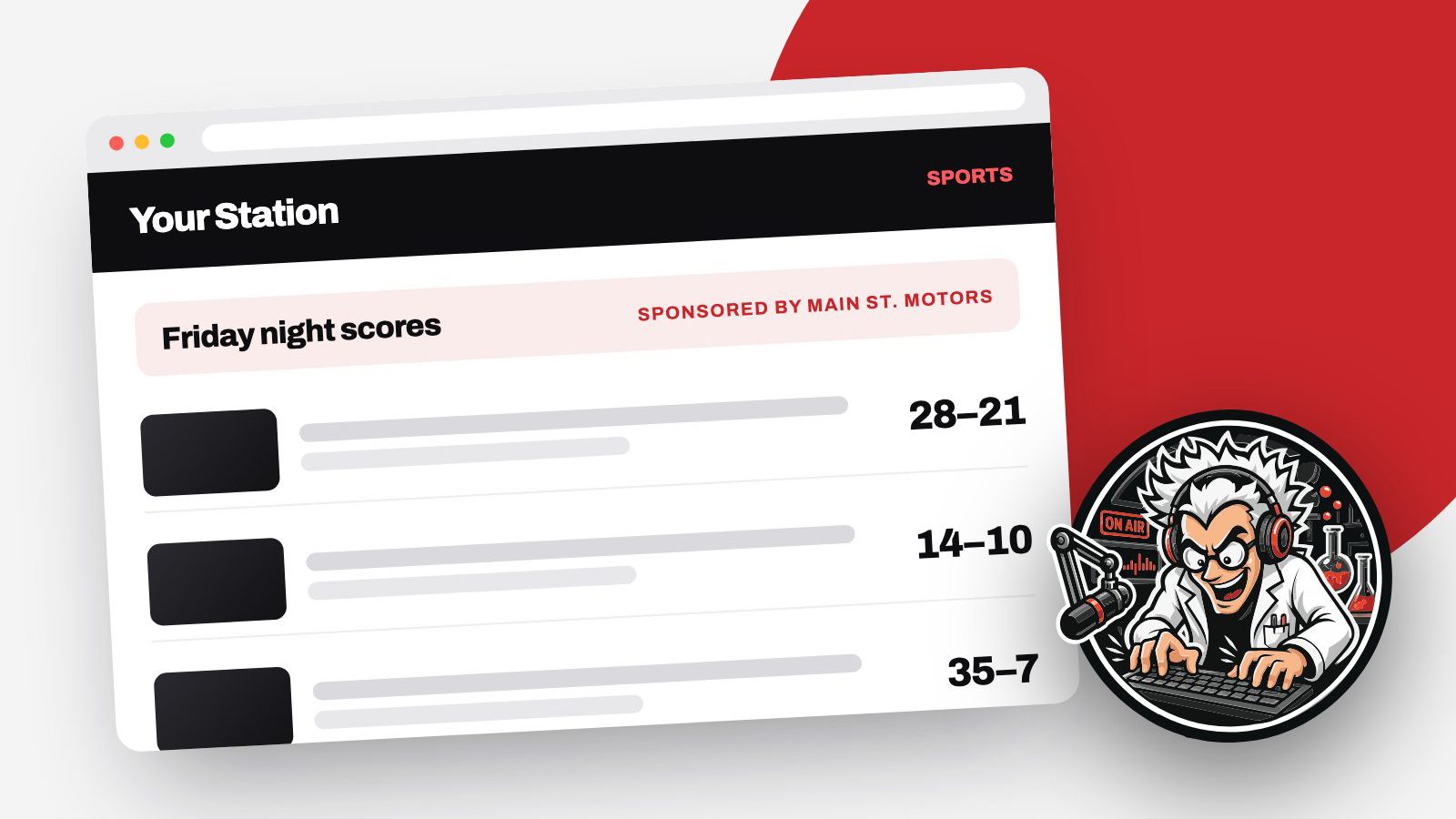
Same laptop. The site has this morning’s road closure, Friday’s high school scores, an obituary from Tuesday, and a piece about the fire hall fundraiser with a photo of the actual fire hall.
Now the dealer is looking at an audience rather than a schedule. A sponsored spot on the sports recap page is a thing they can picture. A category sponsorship of the obituary section is a thing funeral homes buy every day, and they buy it because that page gets read.
The rep never had to argue that the station matters locally. The screen did it.
What the site is doing in that meeting
It is not a product you are selling. Most small-market stations will not build a real digital revenue line, and pretending otherwise wastes everybody’s afternoon.
The site is evidence. It is the proof that your station covers the town, that people come to you for local information, and that a sponsor’s name would sit next to something a real person reads. That evidence changes what your station is worth in the room, whether or not a single digital dollar changes hands.
An out-of-date site is evidence too. It just argues the other way.
The three pages a rep needs
Ask your sales team what they want to be able to show. In our experience it comes down to three things.
Something from this week, so the site is visibly alive. Something with local names in it, so the coverage is visibly local. And a page a sponsor could plausibly own, which is usually obituaries, sports, or a weekly community calendar.
A station that has those three does not need a digital strategy deck. It needs somebody to keep them full.
A test you can run this afternoon
Open your own site on your phone the way a client would. Look at the date on the newest thing. Then imagine handing that phone across a desk.
If you would rather not, your sales team has already had that feeling, and they stopped opening the site in meetings a while ago. Nobody told you, because it is an awkward thing to raise.